Berbera Port: Power on the Ground, Authority in Law
The recent interview with Al Jazeera by the CEO
of DP World, in which he stated that Somalia’s decision to nullify agreements
with the United Arab Emirates would not affect Berbera Port, warrants careful
legal scrutiny rather than emotional reaction.
From a legal perspective, the statement is
unsurprising but not decisive.
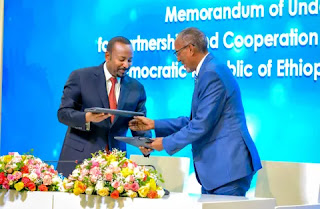
The Federal Government of Somalia has formally
annulled all agreements with the United Arab Emirates,
including those related to Berbera Port. The core question is not whether DP
World continues to operate on the ground, but whether those operations are
legally valid under international law.
Somalia’s strongest position lies in remaining
the only internationally recognised sovereign authority over its territory.
Physical access to a port does not determine sovereignty. Recognition does.
Under international law, only the Federal Republic of Somalia
has the legal capacity to approve foreign port concessions, security
arrangements and international maritime compliance.
This gives the Somali government several lawful
options, even without physical control of Berbera.
First, Somalia can formally declare that
all agreements signed without federal approval are void ab initio. Such a
declaration matters internationally. Courts, insurers, shipping companies, and
multilateral institutions rely on recognised sovereign consent rather than on
local arrangements.
Second, Somalia can challenge the port’s
compliance with international maritime security rules, particularly the ISPS
Code. A port operating without approval from the recognised government faces
questions over the validity of its security certification. This does not
require soldiers or blockades. It requires formal notifications to
international maritime bodies and flag states.
Third, the government can engage ship
insurers, especially Protection and Indemnity Clubs, which insure most of the
world’s commercial shipping. If insurers are put on notice that a port operates
without sovereign authorisation, they reassess risk. Increased premiums or
withdrawn coverage can deter shipping traffic more effectively than any
physical intervention.
Fourth, Somalia can elevate the issue from
a commercial dispute to a matter of state responsibility. The UAE government
wholly owns DP World. Under international law, the actions of state-owned
enterprises may, in certain circumstances, be attributed to the state.
Continued operation in defiance of a clear sovereign annulment strengthens
Somalia’s argument that this is not merely a business disagreement but unlawful
interference.
The Al Jazeera interview reflects DP World's
confidence, but confidence does not constitute legal certainty. Ports today
depend on recognition, insurance, compliance, and paperwork as much as on
concrete and cranes. These are areas in which Somalia still exerts leverage.
Ultimately, Somalia’s most effective tools are
legal, diplomatic and institutional. If used consistently and calmly, they can
reshape the reality around Berbera without escalation. The outcome will not be
decided by statements alone, but by which side controls legitimacy in the eyes
of the international system.

Comments
Post a Comment