Posts

Somalia’s Political Standoff and a Letter That Stops Short

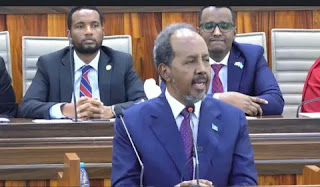
  Prime Minister Hamza Abdi Barre’s letter of 19 January 2026, issued in response to an opposition communiqué, should be understood as a legal act as much as a political one. On closer examination, the letter functions as a procedural response that avoids engagement with the substantive constitutional questions raised by the opposition. The opposition communiqué sets out claims of a legal nature. It questions whether constitutional rules are being followed, challenges the lawfulness of executive conduct, and calls for clarity on the timing and legality of elections. These are not abstract political disagreements. They go to the foundations of constitutional governance, including legality, accountability, and the renewal of authority through elections. The communique proposes dialogue to resolve these identified constitutional concerns. The PM’s letter addresses only the procedural aspects of that call. It confirms that a meeting will take place, specifies a date and venue, and ...

Legal Interpretation of Articles 53, 54, 138, and 142 of the Somali Constitution

Image
  This legal opinion provides a thorough analysis of four key articles- Articles 53, 54, 138, and 142- of the Provisional Constitution of Somalia, which together establish the country's federal legal and organisational framework (Somali Constitution, 2012). Given ongoing political disputes and frequent misinterpretations of these provisions, the study clarifies each article's legal purpose and role, focusing on the scope of foreign policy, the allocation of sovereign and resource powers and the legal transition framework for Federal Member States. Utilising comparative constitutional law, federal theory, and legal precedents like Texas v. White (1869), the opinion affirms the constitutional supremacy of the 2012 Provisional Constitution. It also rejects partisan misreadings of Article 1429 and provides normative guidance to promote legal consistency, national unity, and constitutionalism during Somalia’s federal evolution. Introduction This legal opinion addresses recurring...

When Parliament Speaks and the Presidency Stays Silent

  Somalia’s 2018 ban on DP World remains unenforced, as two administrations have bypassed constitutional procedures. In 2018, Somalia’s Federal Parliament passed a resolution to ban DP World from operating within Somali territory. Lawmakers argued that the company’s agreements with regional administrations violated Somalia’s Constitution, which gives the Federal Government exclusive authority over foreign affairs. The resolution passed with a clear majority in the House of the People, but it was never enacted. Under Article 90 of the Provisional Constitution, a resolution passed by Parliament must be signed by the President to become legally binding. Then, President Mohamed Abdullahi Farmaajo did not sign it. As a result, the resolution was left inactive. When President Hassan Sheikh Mohamud returned to office in 2022, the same resolution remained pending. Despite holding the constitutional authority to approve or reject it, he took no action. The ban was neither enforced nor...

When Parliament Speaks and the Presidency Stays Silent

  Somalia’s 2018 ban on DP World remains unenforced, as two administrations have bypassed constitutional procedures. In 2018, Somalia’s Federal Parliament passed a resolution to ban DP World from operating within Somali territory. Lawmakers argued that the company’s agreements with regional administrations violated Somalia’s Constitution, which gives the Federal Government exclusive authority over foreign affairs. The resolution passed with a clear majority in the House of the People, but it was never enacted. Under Article 90 of the Provisional Constitution, a resolution passed by Parliament must be signed by the President to become legally binding. Then, President Mohamed Abdullahi Farmaajo did not sign it. As a result, the resolution was left inactive. When President Hassan Sheikh Mohamud returned to office in 2022, the same resolution remained pending. Despite holding the constitutional authority to approve or reject it, he took no action. The ban was neither enforced nor...

Why Somalia’s Sovereignty Cannot Be Shared

  On 12 January 2026, the Federal Government of Somalia issued one of the most consequential legal decisions in its recent history. The Council of Ministers declared that it had annulled all agreements concluded with the Government of the United Arab Emirates. This decision applied not only to federal-level arrangements but also to deals made by government administrative entities, affiliated bodies, and regional administrations. Most notably, it cancelled all cooperative arrangements related to the ports of Berbera, Bosaso, and Kismayo. The statement was unambiguous. It was an assertion of national sovereignty and constitutional authority. The government justified its action by citing threats to Somalia’s unity, independence, and political integrity. The move was framed as a defence of the nation’s right to speak with one voice on the international stage. The response was swift. Federal member states, especially Puntland and Jubaland, pushed back. They argued that the agreement...

Berbera Port: Power on the Ground, Authority in Law

    The recent interview with Al Jazeera by the CEO of DP World, in which he stated that Somalia’s decision to nullify agreements with the United Arab Emirates would not affect Berbera Port, warrants careful legal scrutiny rather than emotional reaction. From a legal perspective, the statement is unsurprising but not decisive. The Federal Government of Somalia has formally annulled all agreements with the United Arab Emirates , including those related to Berbera Port. The core question is not whether DP World continues to operate on the ground, but whether those operations are legally valid under international law. Somalia’s strongest position lies in remaining the only internationally recognised sovereign authority over its territory. Physical access to a port does not determine sovereignty. Recognition does. Under international law, only the Federal Republic of Somalia has the legal capacity to approve foreign port concessions, security arrangements and internationa...

Positive Prospects of Transitioning from Parliamentary to Presidential System in Somalia

Image
  Positive Prospects of Transitioning from Parliamentary to Presidential System in Somalia   The dynamics of governance play a pivotal role in a nation's development and stability. In Somalia, shifting from a parliamentary to a presidential system holds the promise of bolstering executive power, reducing political fragmentation, and facilitating effective decision-making. By embracing democratic principles and strengthening the presidential office, Somalia can overcome its challenges and pave the way for a brighter future. Moving from a parliamentary to a presidential system in Somalia presents an opportunity to foster democratic practices. Somalia can navigate a path towards a more prosperous and stable future, unlocking the nation's true potential as a democratic nation. Notably, under the exceptional leadership of President Dr. Hassan Sheikh, Somalia has already achieved significant milestones such as becoming a member of EAC, the lifting of the arms embargo, and the reli...